
Scared of Giving Birth? How to Prepare When You’re Anxious About Labour
If you’re scared of giving birth, you are very much not the only one.
Maybe it’s the pain you’re worried about. Maybe it’s the thought of losing control, tearing, having an emergency caesarean, needing an epidural, getting an epidural, something happening to your baby, or simply having absolutely no idea what labour is actually going to feel like.
And as your due date gets closer, that distant event called “giving birth” can suddenly start to feel alarmingly real.
The good news is that preparing for birth doesn’t have to mean convincing yourself that it will be beautiful, pain-free or exactly as you’ve planned. In fact, I think that’s the wrong goal entirely.
Good birth preparation isn’t about eliminating every fear. It’s about understanding what you’re afraid of, making the unknown less unknown, and knowing what you can do if the thing you’re worried about actually happens.
That is a much more useful kind of confidence.
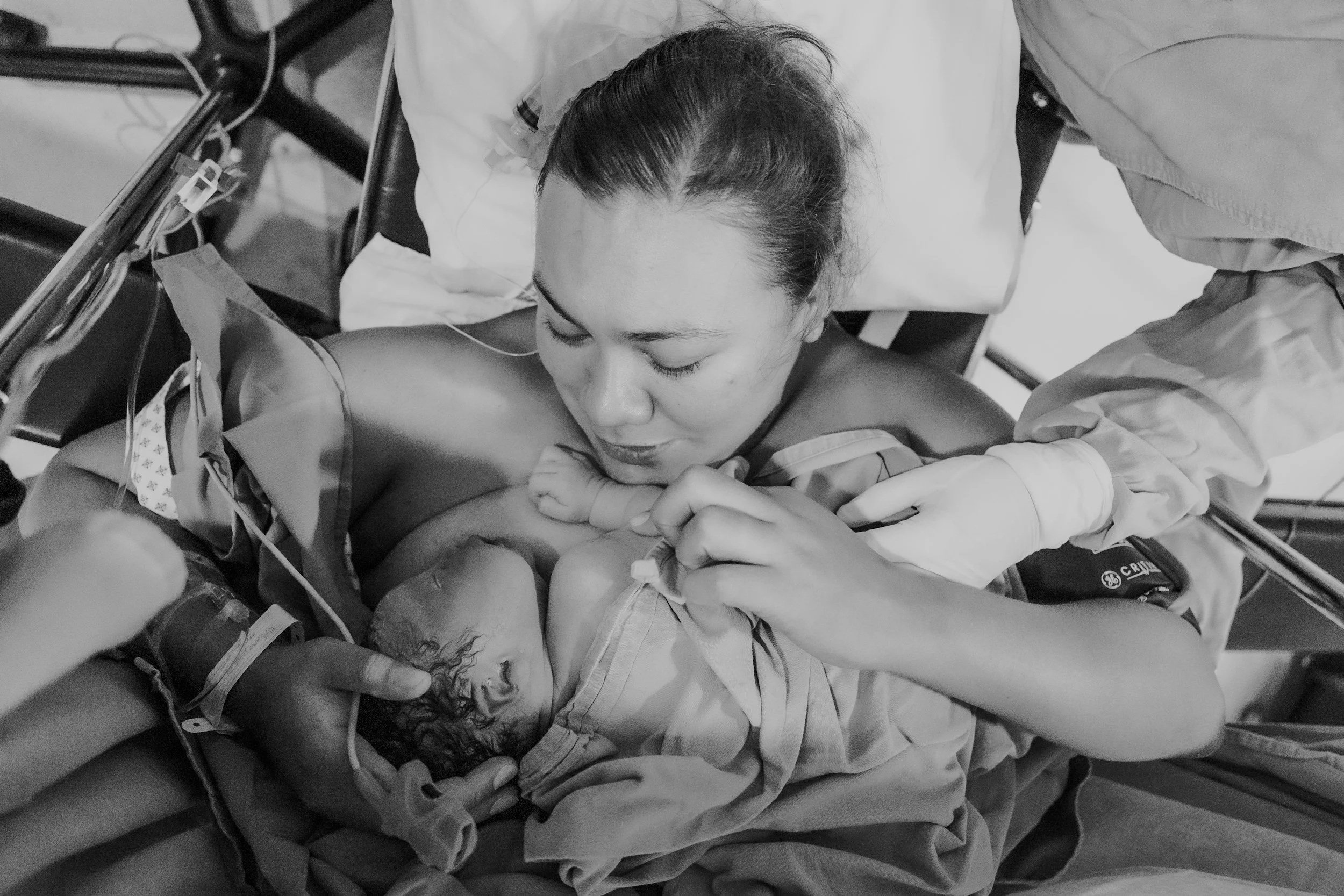
Is it normal to be scared of giving birth?
Yes.
Pain, interventions, injury, the wellbeing of your baby and simply not knowing what’s going to happen are all common sources of fear around childbirth. And it makes sense. Birth is a significant physical event. There are parts of it you can’t predict or control. If you’ve never done it before, you’re trying to imagine an experience you’ve never had. Add a few dramatic birth stories from friends, TikTok or your mother’s group and it’s hardly surprising that your brain might start sounding the alarm.
But there’s a difference between feeling nervous or frightened about birth and being so overwhelmed by fear that it’s affecting your day-to-day life.
An extreme fear of pregnancy or childbirth is sometimes called tokophobia. If thoughts about birth are causing overwhelming anxiety, panic, distress, difficulty functioning, or making you feel unable to cope with your pregnancy, please tell your midwife, obstetrician or GP. You don’t need to manage that level of fear through birth preparation alone.
For everyone else thinking, I’m excited about this baby, but I am really quite scared about how they’re going to get out - let’s talk about what actually helps.
1. Work out what you’re actually scared of
“I’m scared of birth” is enormous. Try making it smaller. What is it, specifically, that makes your stomach flip?
The pain?
Losing control?
Tearing?
Having an induction?
Needing forceps or a vacuum?
Having an emergency caesarean?
Something happening to your baby?
Not being listened to?
Panicking and feeling like you can’t cope?
These are different fears. And they need different answers. If you’re frightened of pain, learning about how labour pain works and what your pain-relief options are may help. If you’re frightened of interventions, understanding why they might be suggested, what choices you have and what questions you can ask gives you something concrete to work with. If you’re scared you’ll panic, practising breathing and relaxation techniques gives you tools to use when your nervous system starts shouting.
And if your biggest fear is that everything will go off-plan, then preparing for more than one version of birth may be far more reassuring than writing the world’s most detailed birth plan.
You can’t prepare properly for a fear you haven’t named.
2. Be careful what you feed your brain
Pregnancy seems to give everyone permission to tell you their most dramatic birth story.
You do not have to listen.
This isn’t about pretending difficult births don’t happen. They do. And I don’t believe useful birth preparation should ever be based on telling women that if they think positively enough, everything will be wonderful. But endlessly consuming frightening birth stories isn’t preparation either.
Your brain is very good at remembering emotionally charged information. If the only births you hear about are emergencies and disasters, it’s easy to start treating those stories as a prediction of your own. Choose your information deliberately.
Learn how birth works. Learn about the things that can change. Read balanced information about interventions and pain relief. Listen to a range of birth experiences rather than only the most dramatic ones.
You need information, not horror stories.
3. Understand what your body is actually doing in labour
One of the best antidotes to What on earth is happening to me? is understanding what’s happening. You don’t need a medical degree. But knowing what contractions are doing, how labour commonly progresses, what hormones are involved, why fear and tension can affect how you experience pain, and what your care team is looking for can make labour feel considerably less mysterious.
This is one of the reasons I care so much about the science part of birth preparation.
I don’t want you lying there thinking, Relax. Relax. RELAX! while having absolutely no idea why you’re doing it. Understanding the physiology gives the techniques context.
Instead of simply being told to breathe, you know why slowing your breathing can help.
Instead of thinking every increase in intensity means something is wrong, you understand what’s changing.
Knowledge doesn’t give you control over birth. But it can give you a much stronger sense of orientation within it.
4. Learn about pain, rather than trying not to think about it
If pain is your biggest fear, avoiding the subject probably isn’t going to make you feel better. So let’s acknowledge something that occasionally gets lost in positive-birth conversations:
Labour can hurt.
You don’t need anyone to promise you otherwise. What you need is to understand the difference between pain and danger, how fear can influence your experience of pain, what coping tools are available to you and what medical pain relief you can choose if you want it.
That might include movement, position changes, breathing, massage, water, heat, relaxation techniques, gas, morphine or an epidural, depending on your circumstances and where you’re giving birth.
And you don’t have to decide in advance which combination makes you a “good” birthing woman. There are no medals for avoiding pain relief. Learning hypnobirthing techniques doesn’t mean you can’t have an epidural. Wanting an epidural doesn’t mean there’s no point learning breathing and relaxation.
The goal is to give yourself more tools, not fewer choices.
5. Prepare for things not going to plan
This sounds counterintuitive when you’re anxious. Surely thinking about inductions, assisted births or caesareans will make you more frightened? Not necessarily.
There’s a big difference between catastrophising about everything that could possibly go wrong and calmly understanding the decisions you might encounter. A birth preference isn’t a contract with the universe.
You might hope to labour in water and end up wanting an epidural.
You might plan an unmedicated vaginal birth and need an induction.
You might desperately want an epidural and progress too quickly to get one.
You might plan a vaginal birth and meet your baby by caesarean.
Preparing for those possibilities doesn’t mean you’re expecting them to happen. It means your entire sense of confidence isn’t dependent on Plan A. One of the most reassuring things you can take into birth is not I know exactly what is going to happen.
It’s: Whatever happens, I understand my options, I know how to ask questions, and I know I can make the next decision from there.
6. Give your birth partner a proper job
One of the worst birth-partner job descriptions is:
“Just be supportive.”
Supportive how?
Your birth partner can be one of your most useful tools for managing fear, but only if they know what they’re doing.
They can help regulate the environment around you, remind you how to breathe when you’ve forgotten every technique you practised, suggest a change of position, massage you, communicate with your care team, ask questions when you’re tired and help you feel safe and less alone.
Talk before labour about what frightens you. Tell them what you think you might need when you’re overwhelmed. And make sure they understand the birth process too.
You shouldn’t have to be the only person in the room who did the homework.
7. Practise before you need the tools
Reading about relaxation isn’t the same as practising it. Neither is saving a breathing reel on Instagram.
If you want breathing, visualisation, massage, relaxation or other hypnobirthing techniques to be available to you when labour becomes intense, practise them beforehand. They should start to feel familiar.
This doesn’t mean spending an hour every evening performing elaborate birth rituals. Ten minutes of relaxation. Practising slower breathing in the shower. Trying different positions with your partner. Listening to a guided relaxation before bed.
You’re building familiarity. And familiar things are much easier to reach for when your thinking brain is rather busy having a baby.
8. Stop trying to become completely fearless
This might be the most important one.
You don’t need to reach 40 weeks feeling serene, glowing and utterly unafraid.
You can feel nervous and still be prepared.
You can dislike the idea of pain and still cope with labour.
You can hope for one kind of birth and still prepare for another.
You can use hypnobirthing techniques and swear.
You can breathe beautifully for six hours and then ask for an epidural.
You can feel frightened when something changes and still ask good questions and make an informed decision.
Confidence isn’t believing that everything will go perfectly.
It’s believing that you have tools, information, support and choices even when it doesn’t. And that is something you can prepare for.
What if I’m still terrified of giving birth?
If your fear feels overwhelming rather than simply nervous - if you’re experiencing panic, persistent distress, intrusive thoughts, avoiding appointments or conversations about birth, struggling to function, or feeling that your fear is taking over your pregnancy, please talk to your midwife, obstetrician or GP.
Severe fear of childbirth is sometimes called tokophobia and deserves proper support.
Birth education can be incredibly useful, but it isn’t a substitute for individual mental-health or maternity care when you need it.
You don’t have to white-knuckle your way through pregnancy feeling terrified.
You don’t need a perfect birth. You need to feel prepared.
This is exactly why I created Bright Births. Not to promise you a pain-free birth. Not to convince you that if you relax hard enough you’ll get the birth you wrote down. And definitely not to tell you there’s one “right” way to give birth.
Bright Births combines the science of labour, the psychology of fear and pain, practical hypnobirthing and relaxation tools, informed decision-making and proper birth-partner preparation.
So instead of walking into birth hoping everything goes to plan, you walk in understanding what’s happening, knowing what your options are and having practical tools to use along the way.
Because the goal isn’t to control birth. It’s to feel ready for it.
Want to feel calmer and genuinely prepared for birth?
The Bright Births Online Antenatal & Birth Preparation Course includes 45 bite-sized videos across eight modules, practical relaxation and hypnobirthing tools, partner preparation and downloadable resources you can return to throughout pregnancy.
It’s designed for every kind of birth, natural, medicated, induced or caesarean, because preparation shouldn’t depend on everything going to Plan A.
Sources / Further reading:
Pregnancy, Birth and Baby's Fear of Childbirth guide
2026 systematic review on prenatal education and fear of childbirth.